In the demanding landscape of industrial infrastructure, the galvanized chain stands as a cornerstone of reliability and strength. By fusing the structural integrity of steel with a protective zinc coating, these components solve the age-old conflict between heavy-duty load-bearing requirements and the inevitable decay caused by oxidation. From maritime ports to urban construction sites, the ability to resist corrosion without sacrificing tensile strength makes this material indispensable for global logistics and safety.
Understanding the nuances of galvanization is not merely a technical requirement but a strategic advantage for procurement managers and engineers. When choosing a galvanized chain, one must consider the environment—whether it be the salt-laden air of a coastal region or the chemically aggressive atmosphere of a processing plant. The right specification ensures that the chain remains functional for decades, significantly reducing the total cost of ownership and minimizing hazardous failures.
Globally, the demand for high-grade zinc-coated steel products continues to rise as industries shift toward more sustainable, long-life materials. By integrating a galvanized chain into critical systems, organizations can achieve a balance between immediate cost-efficiency and long-term structural resilience. This guide explores the technical depths, global applications, and future innovations of these essential metal products to help you make an informed engineering decision.
Global Relevance of Galvanized Chain
On a global scale, the reliance on galvanized chain is mirrored by the growth of international trade and infrastructure development. According to ISO standards for corrosion protection, the application of zinc coatings is the most effective method for extending the lifecycle of steel in outdoor environments. In regions with high humidity or salinity, untreated steel can lose structural integrity in a matter of months, whereas a properly galvanized product can withstand these elements for decades.
This global necessity is driven by the urgent need for safety in heavy industry. Whether it is used in the securing of cargo on massive container ships or as a component in high-tension fencing and gabion systems, the galvanized chain prevents catastrophic failures that could lead to economic loss or human injury. As emerging economies invest heavily in bridge and port construction, the demand for standardized, corrosion-resistant chaining has reached an all-time high.
Defining the Galvanized Chain Standard
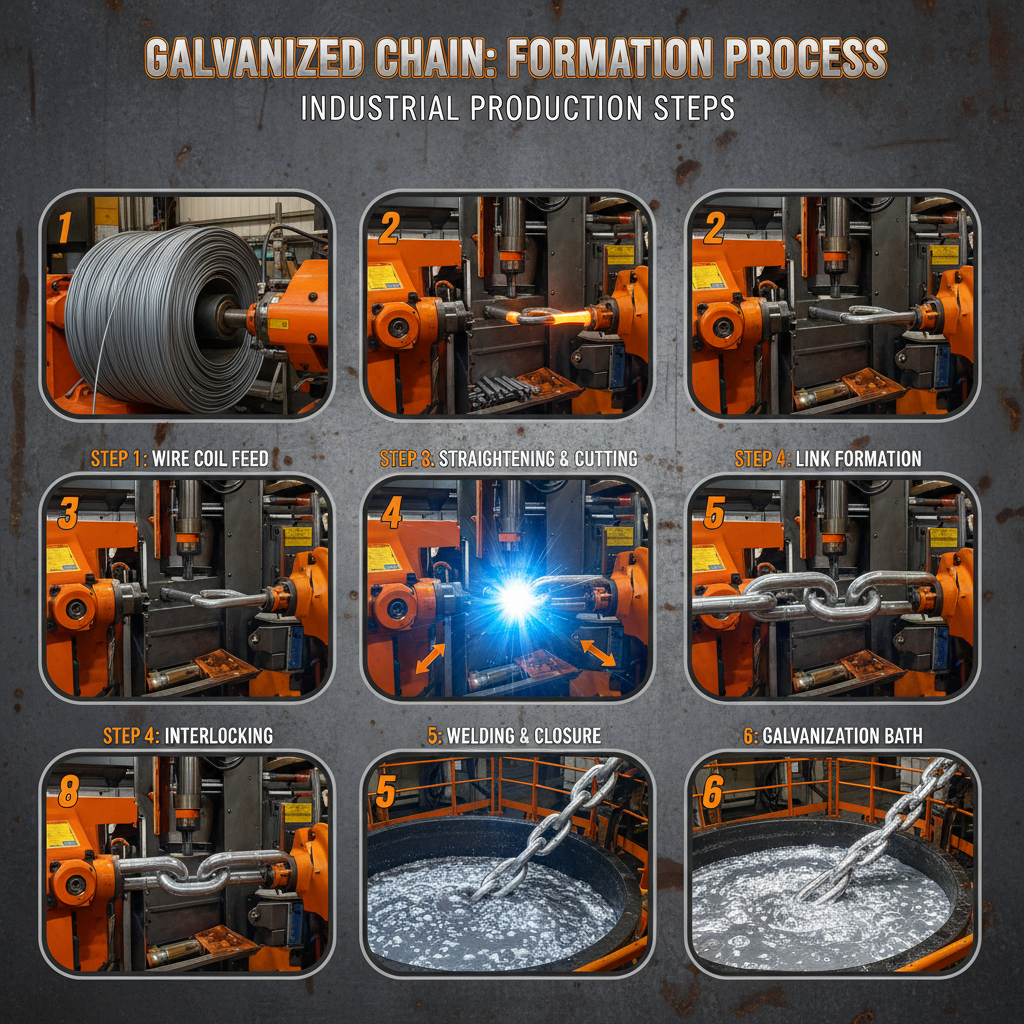
In the simplest technical terms, a galvanized chain is a steel chain that has been coated with a layer of zinc through a process known as galvanization. This process creates a metallurgical bond between the zinc and the steel, forming a protective barrier that prevents oxygen and moisture from reaching the underlying iron. Unlike paint or powder coatings, which merely sit on the surface, galvanization penetrates the metal, offering a level of protection that is integral to the chain's structure.
This connection to modern industry is profound. In the context of humanitarian needs—such as the rapid deployment of Gabion boxes for flood prevention or the installation of secure perimeter fences in refugee camps—the use of galvanized chain ensures that these critical structures do not fail prematurely. The reliability of the coating means that limited resources are not wasted on frequent replacements in remote or hostile environments.
From an engineering perspective, the "standard" refers not just to the coating, but to the grade of steel used and the thickness of the zinc layer (measured in microns). A high-quality galvanized chain must balance flexibility with hardness, ensuring that the zinc layer does not flake off under extreme tension or mechanical stress, thereby maintaining the "sacrificial" protection of the zinc.
Core Components of Durability and Strength
The primary factor determining the lifespan of a galvanized chain is the Sacrificial Protection mechanism. Zinc is more chemically active than iron; therefore, it corrodes first, sacrificing itself to protect the steel core. This means that even if the chain is scratched during installation, the surrounding zinc will continue to protect the exposed steel from rusting.
Tensile Strength and Load Capacity are equally critical. A professional-grade galvanized chain is manufactured from high-carbon or alloy steel before the dipping process. This ensures that the chain can handle massive static and dynamic loads without stretching or snapping, making it suitable for heavy-duty industrial lifting or securing large-scale wire mesh structures.
Lastly, Surface Uniformity plays a key role in preventing localized corrosion. In a hot-dip galvanizing process, the galvanized chain is submerged in molten zinc, ensuring that every link, including the interior of the loops, is completely coated. This eliminate "blind spots" where rust could otherwise start and spread invisibly within the chain.
Industrial Applications and Use Cases
The versatility of the galvanized chain allows it to be applied across a vast array of sectors. In the maritime industry, these chains are essential for mooring and anchoring, where they are constantly exposed to the highly corrosive nature of saltwater. Similarly, in the agricultural sector, they are used for livestock containment and crop protection fencing, where they must withstand both weather extremes and animal impact.
In urban development, specifically within the realm of civil engineering, galvanized chain is often integrated with Welded Wire Mesh and Gabion Boxes to stabilize slopes and prevent soil erosion. For instance, in post-disaster relief operations, these chains are used to quickly assemble retaining walls that protect temporary shelters from landslides, providing immediate safety and dignity to displaced populations.
Comparative Performance of Galvanized Chain Types
Long-Term Value and Economic Advantages
From a financial perspective, the initial investment in a high-quality galvanized chain is often slightly higher than that of raw steel, but the long-term value is unmatched. The reduction in maintenance costs—specifically the elimination of the need for frequent painting or rust-treatment—creates a significant return on investment. In large-scale projects, the cost of labor to replace a rusted chain often exceeds the cost of the chain itself by tenfold.
Beyond the numbers, there is an emotional and logical value rooted in safety and trust. When a facility manager installs a galvanized chain for overhead hoisting or safety barriers, they are investing in peace of mind. The reliability of the material ensures that workers are safe and that operational downtime is minimized, which in turn enhances the overall reputation and reliability of the organization.
Future Trends in Zinc-Coated Metallurgy
The future of the galvanized chain industry is being shaped by a drive toward "Green Galvanization." This involves the development of more eco-friendly zinc extraction methods and the reduction of hazardous byproducts during the pickling process. As global policies like the European Green Deal put pressure on manufacturing, the industry is shifting toward closed-loop systems that recycle zinc and reduce carbon emissions.
Another emerging trend is the integration of nano-coatings. By applying a thin layer of nanotechnology-based sealant over the galvanized chain, manufacturers can create a "duplex system" that provides an exponential increase in corrosion resistance. This is particularly useful for extreme environments, such as deep-sea oil rigs or high-pollution industrial zones.
Automation and digital transformation are also playing a role. Smart manufacturing allows for the precise control of the dipping time and temperature, ensuring that every galvanized chain has a perfectly uniform coating thickness. This precision reduces material waste and ensures that every batch meets the rigorous E-E-A-T (Experience, Expertise, Authoritativeness, Trustworthiness) standards required by high-end global clients.
Overcoming Common Implementation Challenges
One of the most common challenges in using galvanized chain is "white rust," a powdery white substance that forms when zinc is exposed to moisture without enough air circulation. While this is primarily a cosmetic issue, it can signal that the chain is stored improperly. The solution is to ensure proper ventilation during storage and transport, preventing the condensation that leads to this phenomenon.
Another limitation is the risk of "hydrogen embrittlement" in ultra-high-strength steels during the acid pickling phase of galvanization. Expert manufacturers overcome this by using mechanical descaling or alternative chemical treatments that remove oxides without introducing hydrogen into the metal lattice, thereby preserving the chain's ductility and preventing sudden brittle fractures.
Finally, the challenge of welding galvanized chain often confuses onsite contractors, as the zinc coating vaporizes during welding, creating toxic fumes and leaving the weld joint unprotected. The professional approach is to grind away the zinc from the weld area, perform the weld, and then apply a cold-galvanizing spray or zinc-rich paint to the joint to restore the corrosion barrier.
Analysis of Galvanized Chain Specifications and Performance
| Coating Method |
Avg. Lifespan (Years) |
Environmental Fit |
Maintenance Level |
| Hot-Dip Galvanized |
20-50 |
High Salinity / Marine |
Very Low |
| Electro-Galvanized |
5-10 |
Indoor / Controlled |
Moderate |
| Cold-Galvanized |
2-5 |
Dry / Low Humidity |
High |
| Zinc-Aluminum Alloy |
30-60 |
Industrial Acidic |
Very Low |
| Pre-Galvanized Steel |
10-20 |
Standard Outdoor |
Low |
| Duplex (Zinc + Powder) |
50+ |
Extreme Coastal |
Minimal |
FAQS
Hot-dip galvanizing involves immersing the chain in molten zinc, resulting in a thicker, more durable coating that is ideal for outdoor and marine use. Electro-galvanizing uses an electrical current to apply a thinner zinc layer, which provides a smoother, more aesthetic finish but is significantly less resistant to corrosion, making it better suited for indoor applications.
White rust occurs when zinc is exposed to moisture without adequate air circulation. To prevent this, store your chains in a dry, well-ventilated area. Avoid wrapping them tightly in plastic film while they are damp. If white rust appears, it can usually be removed with a stiff brush or a mild vinegar solution without damaging the underlying protection.
Yes, provided the core steel is of the correct lifting grade (such as Grade 80 or 100). Galvanization provides the corrosion protection, but the load-bearing capacity depends on the steel's metallurgy. Always check the Working Load Limit (WLL) stamped on the chain or provided in the manufacturer's certificate before using it for overhead lifting.
Galvanized chain is often more cost-effective and has a lower initial carbon footprint in production than some high-grade stainless steels. Furthermore, zinc is highly recyclable. By extending the life of the steel core through galvanization, the need for frequent replacement is reduced, which lowers the overall environmental impact over the product's lifecycle.
The first sign of wear is the disappearance of the bright, spangled zinc finish, replaced by a dull grey color. Once you see red rust (iron oxide), the zinc layer has been depleted in that area. At this point, the chain's structural integrity may be compromised, and it should be inspected for thinning of the links or replaced immediately.
For most applications, the zinc coating is sufficient. However, in "C5-M" (very high marine) environments, applying a specialized powder coating or epoxy paint over the galvanization—known as a Duplex System—can double the service life. If you do paint, ensure the zinc is properly cleaned to avoid adhesion failure.
Conclusion
The galvanized chain represents a perfect marriage of strength and resilience, providing an essential solution to the universal problem of metal corrosion. From its sacrificial zinc layer to its high-tensile steel core, every element of its design is engineered to ensure safety and longevity in the world's harshest environments. By understanding the distinctions between galvanizing methods and the importance of proper specification, industries can optimize their infrastructure and reduce long-term operational costs.
Looking forward, the evolution of green metallurgy and nano-coatings will only enhance the value proposition of these products. We recommend that procurement officers and engineers prioritize certified hot-dip galvanized options for any project where failure is not an option. Investing in quality today prevents the costly failures of tomorrow. For professional-grade solutions in wire mesh and chaining, visit our website: www.tymetalwiremesh.com.
 TEL:
+86-13102802206
TEL:
+86-13102802206
 Email:
fencenetting@china.com
Email:
fencenetting@china.com