Understanding the chain wire fencing price per metre installed is essential for any property owner or project manager planning a security perimeter. This cost typically encompasses the raw materials—such as galvanized steel or PVC-coated wire—the structural posts, and the professional labor required for precise installation. Because pricing varies based on gauge, mesh size, and site conditions, a comprehensive cost analysis is necessary to ensure budget accuracy.
Many procurement teams struggle with hidden costs in fencing projects, such as terrain preparation or specialized hardware. In the metal wire products industry, the gap between a basic residential fence and a high-security industrial barrier is significant, impacting both the initial expenditure and the long-term maintenance cycle. Choosing the wrong specification can lead to premature corrosion or structural failure, increasing the total cost of ownership.
This guide provides a detailed breakdown of pricing factors, material selection criteria, and installation best practices. By examining the relationship between wire diameter, coating types, and labor requirements, readers will be able to accurately estimate their investment and select a fencing solution that balances security requirements with financial constraints.

1Core Factors Influencing Installation Costs

The chain wire fencing price per metre installed is not a fixed number but a result of several variable components. The primary driver is the material cost, which includes the wire mesh and the support posts. Heavier gauge wires and larger diameters provide more strength but increase the weight and cost of the materials. Additionally, the type of surface treatment—whether electro-galvanized or hot-dip galvanized—significantly alters the price based on the expected lifespan of the fence.
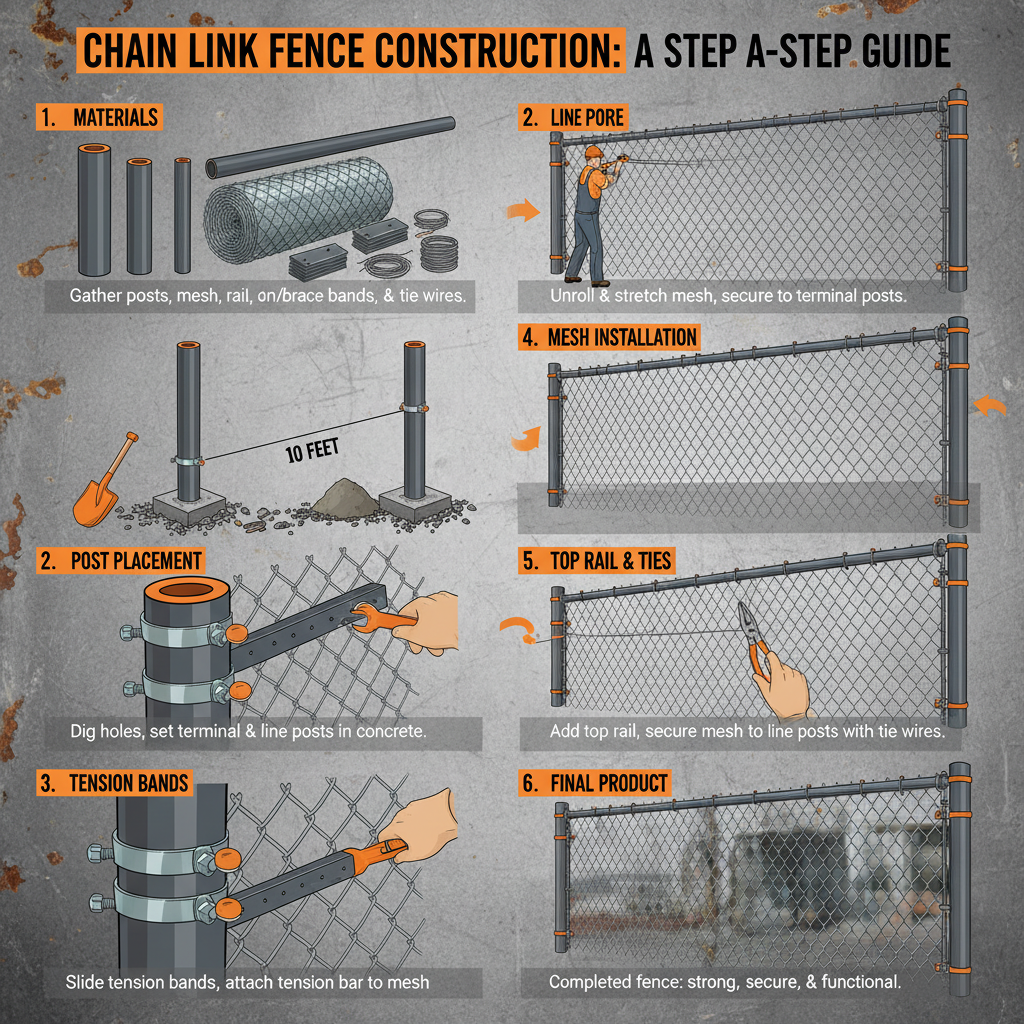
Beyond the wire itself, the installation cost includes the placement of terminal posts and tension wires. A fence that requires frequent bracing or specialized corner assemblies will see a higher cost per metre. The depth of the post footings, determined by local frost lines or security requirements, also adds to the labor and concrete costs.
Finally, site accessibility plays a role. Projects in remote areas or those requiring manual hauling of materials across a site will incur higher operational costs compared to open fields where machinery can be used for rapid post-driving and mesh stretching.
2Material Specifications and Their Impact on Price
Material selection is the most direct way to control the chain wire fencing price per metre installed. Low-carbon steel wire serves as the base for most chain link systems, but the finishing process defines its value. Electro-galvanized options are generally more affordable and suitable for indoor or low-corrosion environments, while hot-dip galvanizing offers superior rust resistance for outdoor industrial use.
Wire diameter and mesh aperture are critical technical specifications. A 2mm wire with a 50mm mesh is standard for residential use, but industrial perimeters often require 3mm or 4mm wire to prevent cutting and sagging. As the wire thickness increases, the amount of raw steel required grows, directly raising the price per metre.
Stainless steel welded wire mesh represents the premium end of the spectrum. While significantly more expensive than galvanized steel, it is indispensable in food processing plants or chemical facilities where corrosion resistance is a non-negotiable safety requirement.
3Common Application Scenarios and Budgeting
Budgeting for chain wire fencing depends heavily on the intended use case. For agricultural applications, the priority is often cost-efficiency and basic containment, leading to the use of lighter galvanized wires and wider mesh. In these scenarios, the price per metre is kept low by minimizing the number of structural supports and opting for standard heights.
Industrial and commercial sites require a different approach. Here, security is paramount, often necessitating the addition of barbed wire or razor wire at the top of the fence. These additions increase both the material cost and the installation complexity, as specialized capping and tensioning are required to secure the topping.
Public infrastructure, such as airport or highway fencing, involves the highest specifications. These projects utilize heavy-duty welded wire panels or thick chain link with deep-set reinforced concrete posts to withstand high impact and environmental stress, resulting in the highest price per metre installed.
4Performance Metrics of Installed Chain Wire Systems
When evaluating the chain wire fencing price per metre installed, it is vital to look at the performance-to-cost ratio. A cheaper installation that sags within two years is more expensive in the long run than a premium system that remains taut for a decade. Key metrics include tensile strength, coating thickness (measured in microns), and the stability of the solder joints in welded variations.
The durability of the fence is largely determined by the zinc coating. Hot-dip galvanizing creates a thick, bonded layer that resists oxidation much better than the thin layer provided by electro-galvanizing. This technical difference manifests as a significant gap in the maintenance frequency required over a 10-year period.
chain wire fencing price per metre installed Performance Metrics
Installation quality also impacts performance. Properly tensioned mesh prevents "belly" formation, which otherwise compromises the security of the perimeter. Using professional tools for stretching and securing the wire ensures that the structural integrity of the fence is maintained across its entire length.
5Procurement Best Practices for Fencing Projects
To optimize the chain wire fencing price per metre installed, procurement teams should focus on specification accuracy. Requesting a "standard fence" often leads to over-specification (paying for more strength than needed) or under-specification (leading to premature failure). Clearly defining the wire diameter, mesh size, and coating type is the first step to an accurate quote.
It is also recommended to request a sample of the galvanized coating. Testing the adherence and thickness of the zinc layer can prevent the installation of sub-standard materials that look identical to high-quality products but fail quickly under weather exposure.
Finally, ensure the contract includes a clear breakdown of installation stages: site clearing, post setting, mesh stretching, and final securing. This transparency prevents unexpected "extra" charges during the installation phase and ensures the project remains on budget.
6Industry Trends in Security Fencing Technology
The industry is shifting toward "smart" fencing and integrated systems. While the basic chain wire fencing price per metre installed remains focused on steel and labor, there is an increasing trend of integrating sensors and fiber-optic cables into the mesh to detect intrusions. This turns a passive barrier into an active security system.
Sustainability is also influencing material choices. There is a growing demand for recycled steel and eco-friendly coating processes that reduce the chemical footprint of the galvanizing process. These innovations often come with a higher initial price but offer better compliance with environmental regulations.
Furthermore, the use of automated installation machinery is reducing labor hours. Post-driving machines can install supports significantly faster than manual digging and pouring, which may eventually lower the "installed" portion of the per-metre cost for large-scale projects.
7Comparative Analysis of Fencing Options
Choosing the right system requires comparing the total investment against the required security level. While basic chain link is the most economical, welded wire mesh panels offer higher rigidity and a cleaner look, though they may have a higher installation cost due to the precision required in post-alignment.
The table below compares common options to help determine which system provides the best value based on the specific needs of the site and the available budget.
| Fence Type | Relative Cost | Durability | Best Use Case |
|---|---|---|---|
| Galvanized Chain Link | Low to Medium | High | Agricultural / Residential |
| PVC Coated Chain Link | Medium | Very High | Coastal / Parks |
| Welded Wire Panel | Medium to High | Very High | Industrial / Commercial |
| Stainless Steel Mesh | Very High | Extreme | Chemical / Food Grade |
| High-Security Mesh | High | Extreme | Airports / Prisons |
| Basic Steel Wire | Very Low | Low | Temporary Fencing |
Ultimately, the chain wire fencing price per metre installed should be viewed as an investment in risk mitigation. By selecting the correct material and ensuring professional installation, property owners can avoid the recurring costs of repair and the potential losses associated with security breaches.
Frequently Asked Questions
Conclusion
Determining the chain wire fencing price per metre installed requires a balanced look at material grade, coating technology, and labor requirements. While the initial cost is a primary concern, the true value of a fencing system is found in its longevity and its ability to meet specific security goals. By selecting the appropriate gauge and finish—such as hot-dip galvanizing for industrial durability or PVC for coastal protection—you can ensure a high return on investment.
For those seeking a reliable partner in metal wire solutions, reviewing specifications from established manufacturers is key. Readers evaluating suitable solutions for their security perimeters can review the available product information and technical data at www.tymetalwiremesh.com to make an informed procurement decision.